
La Salle County Arrest Warrants Explained
An arrest warrant is a written command from a magistrate. It tells an officer to take a person into custody. Texas law sets the required contents: the warrant must identify the person or give a reasonably definite description, state the offense, and carry the magistrate's signature and title. A La Salle County arrest-warrant question may land in felony district court, county court, one of four JP precincts, or before a municipal judge. Whoever issues it controls the file and any recall. A sheriff or constable may execute the order. That officer still cannot withdraw it.
Probable Cause for La Salle County Arrest Warrants
A sworn complaint or affidavit comes first. Written and sworn, it gives a magistrate facts to review for probable cause before an arrest warrant issues in La Salle County. A summons may be used where law allows, and skipping a required appearance after a summons can bring a warrant next. The four JPs perform magistrate functions here, while district and county judges run their own criminal dockets. On the 81st and 218th dockets, an indictment order can direct the clerk to issue process when no warrant went out earlier or when bond has changed. Read that order as a case document only, not as word on today's warrant status. The official district court website identifies its courts and their contact routes.
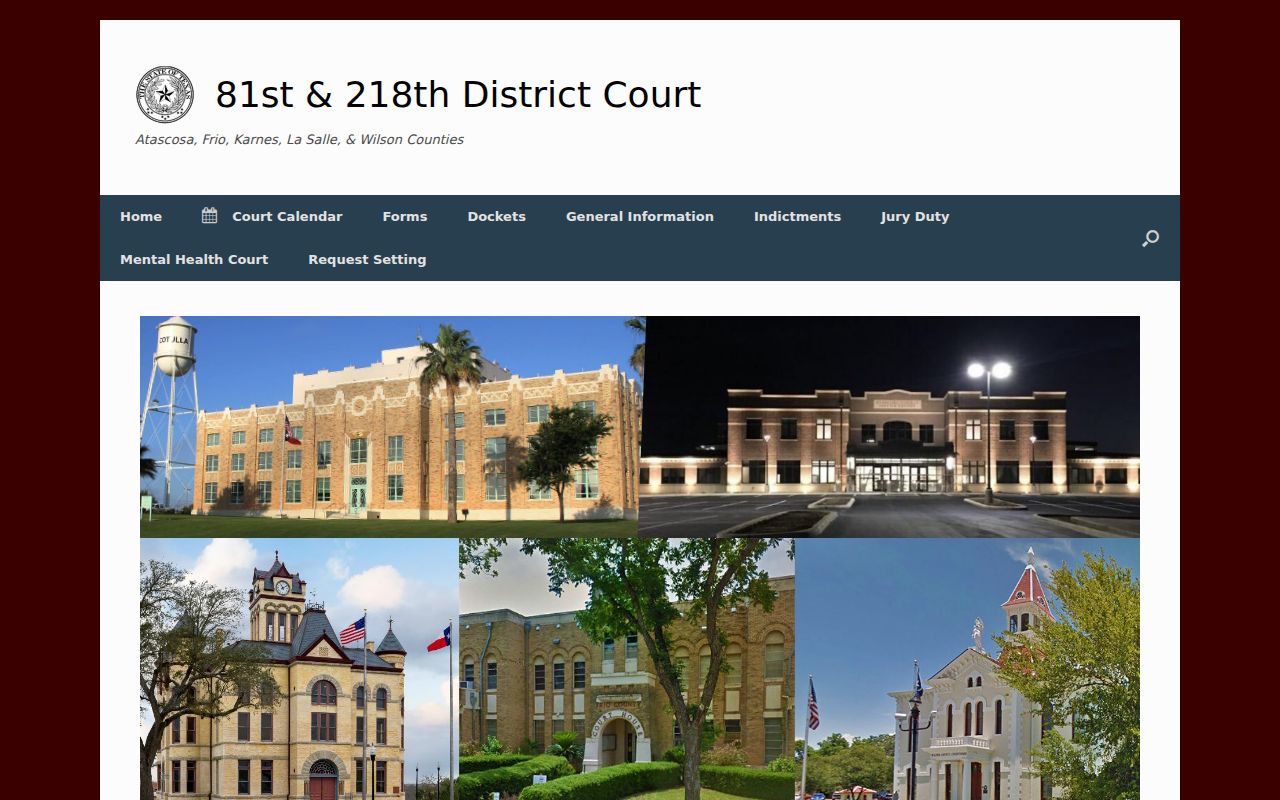
The district court site serves five counties. Use the La Salle County location and your case details when looking up a file there.
Inside a La Salle County Arrest Warrant
A warrant record can tie together a lot. Expect a cause number, issuing court and judge, the offense, the complaint or affidavit, bond conditions, the directed officer, and return information. La Salle County's public docket PDFs show no single normalized current-status field. So the issuing clerk or agency must confirm whether the process is still active.
| Case reference | District docket examples use a year-month-sequence pattern, such as YY-MM-NNNNN; it is a format example, not a live warrant number. |
|---|---|
| Issuing official | Judge or magistrate and the court with authority over the case. |
| Offense | Charge and classification stated in the lawful record. |
| Bond or release | Amount and terms if set; La Salle has no published countywide warrant bond schedule. |
| Return/status | Execution date, return, recall, or another court update when available. |
81st and 218th La Salle County Arrest-Warrant Files
The district court's public site carries dockets, calendars, and date-linked indictment PDFs for La Salle County cases. A dated PDF can help you spot a cause number or an order. For anything beyond that, ask the County/District Clerk at (830) 483-5120 whether the record was served, recalled, or superseded. The district court location page lists the La Salle County courthouse route and the court's multi-county service area.
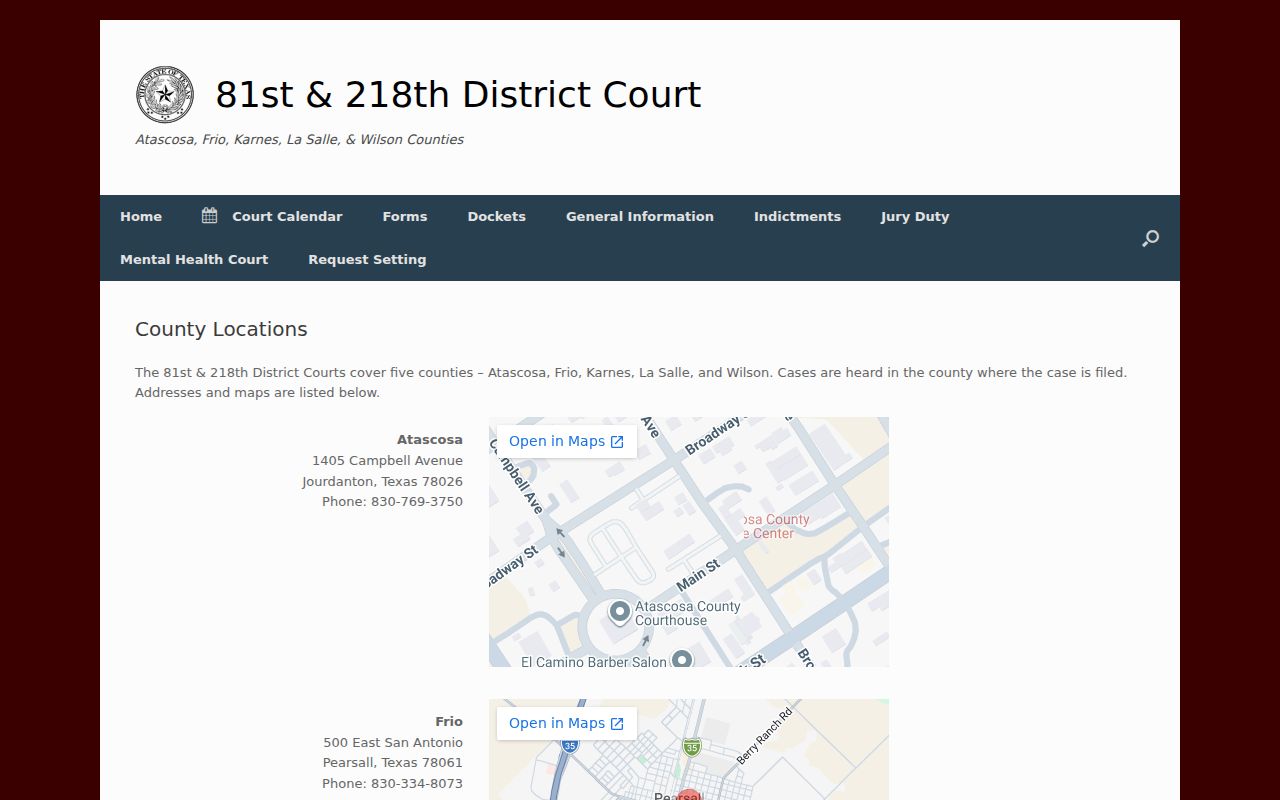
The dated indictment archive sorts La Salle County filings by date, not by a live name search.
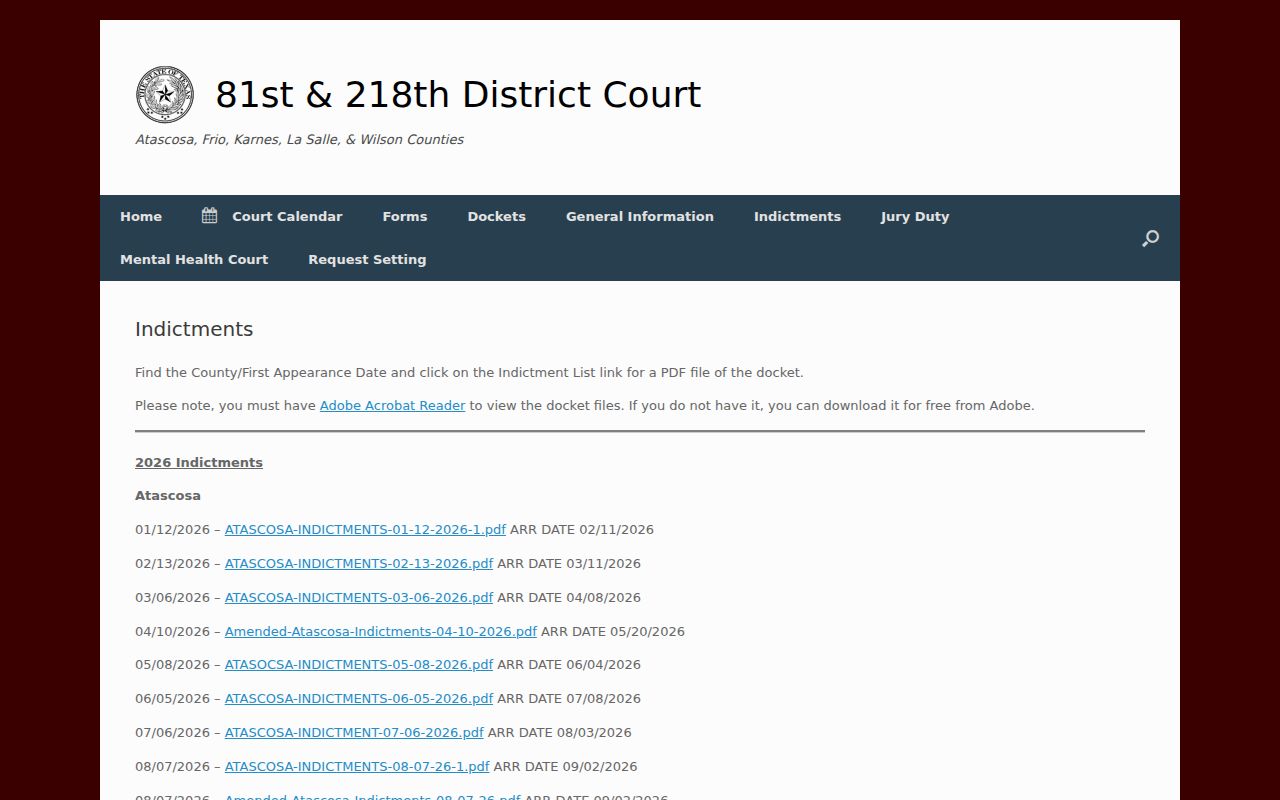
The archive structure helps locate a file, but the clerk confirms current process.
Serving Arrest Warrants in La Salle County
Texas arrest warrants travel. An authorized peace officer may execute one anywhere in the state. In La Salle County the serving officer can be a sheriff, a constable, a city police officer, or another agency named in the process. Constables handle justice-court process, and the county lists four precinct offices, though some of their direct phone fields are incomplete. The sheriff's published duties include jail operation, courthouse security, process service, and bail for prisoners in custody. The county names no separate warrant unit and posts no dedicated warrant line. Remember the order controls the warrant. The serving agency can explain only its own execution or custody role.
Which La Salle County Officers Serve Warrants
Read the directed officer and court on the paper before you call anyone. A Cotulla municipal matter belongs with the municipal clerk, even though the city planning record says Cotulla has no police station. Encinal has a police department page describing 24-hour service, but it promises no public warrant lookup. County and district process may route to the sheriff or a constable instead. After an arrest, Texas law requires presentation to a magistrate without unnecessary delay and no later than 48 hours, subject to the statute's procedures. The judge then sets the next step. Arrest, bond, and the underlying case are separate questions.
Comparing Arrest, Summons, and Bench Warrants
These terms describe different court actions. A summons tells a person to appear. An arrest warrant authorizes custody based on probable cause. A bench or FTA warrant usually follows a missed court obligation in La Salle County.
| Record | Usual trigger | Who confirms it |
|---|---|---|
| Arrest warrant | Sworn facts and probable cause | Issuing magistrate or court clerk |
| Summons | Lawful notice to appear | Court that issued the summons |
| Bench / FTA process | Missed setting or court requirement | Court that set the date |
Ask the clerk for the formal label, since La Salle County's public pages publish no shared code list.
Public Access to an Executed La Salle County Warrant
Once an arrest warrant is executed, more of the file opens up. Code of Criminal Procedure Article 15.26 makes the executed warrant and the affidavit presented to the magistrate public, subject to other confidentiality rules. The Texas Judicial Branch also explains that warrant records governed by statute are not treated like ordinary Rule 12 administrative records. The Texas courts' Rule 12 page describes both court-record access and Article 15.26.
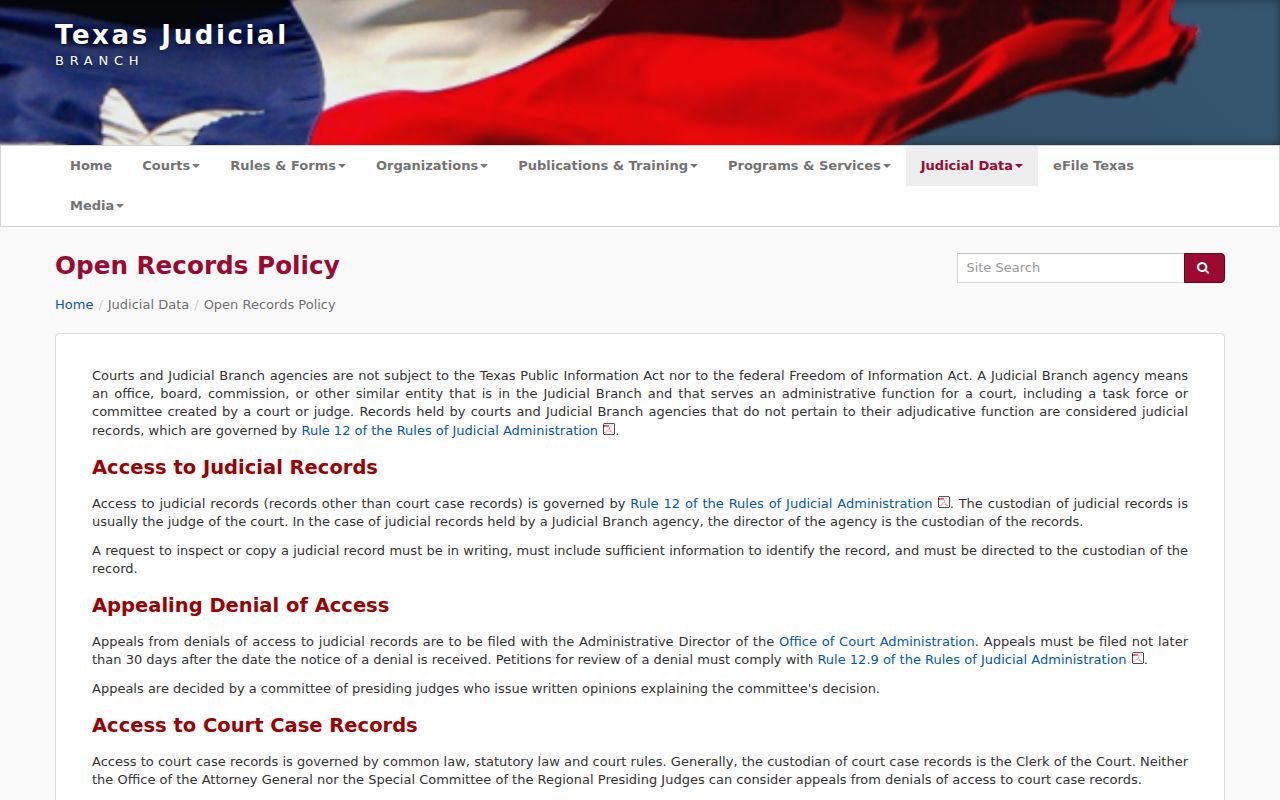
Some La Salle County files stay closed. Juvenile warrants, sealed material, and active-investigation records face separate limits, so ask the court or agency holding the file. See Article 15.26 and the Texas Judicial Branch access guidance before making a targeted request.
Federal Warrant Records in the Laredo Division
Federal process is not a La Salle County warrant. La Salle County sits in the Southern District of Texas, Laredo Division, and the federal courthouse is in Laredo. For federal questions, the federal clerk, a defense attorney, or the U.S. Marshals route is the right one. A county clerk cannot recall federal process. The Laredo federal courthouse page sets out its public location and security rules.
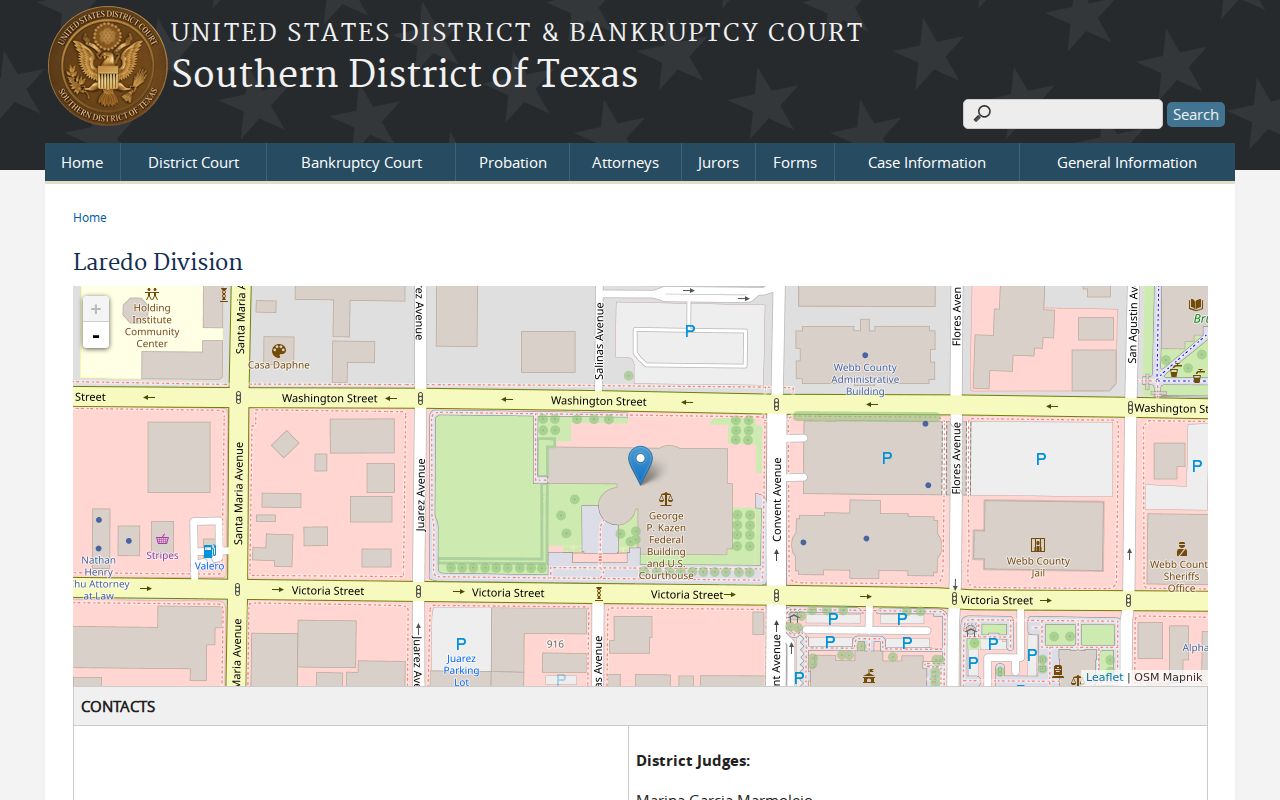
Bring photo ID to the federal courthouse in Laredo, which serves La Salle County. Cellphones stay out, and recording needs prior authorization. The U.S. Marshals Laredo office listing posts the federal contact.
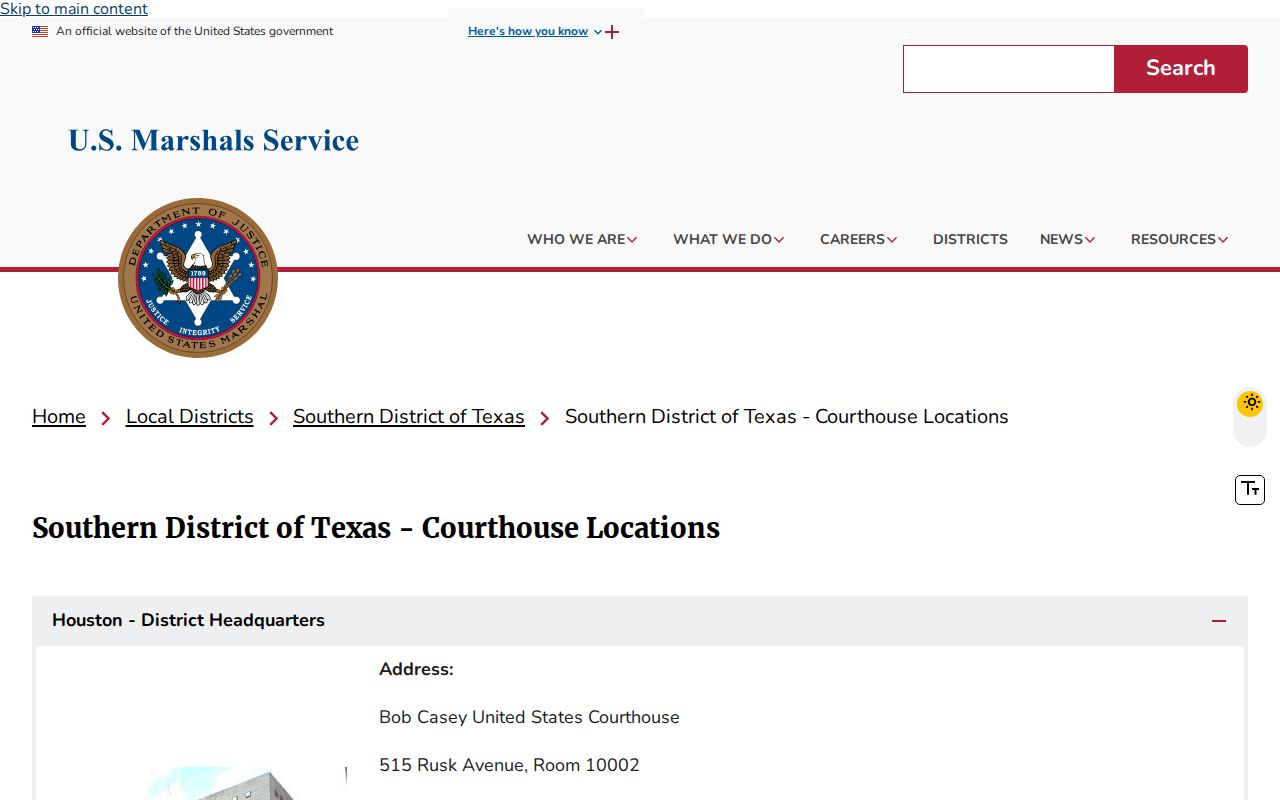
La Salle County residents can check federal filings through PACER pricing and access guidance. Sealed warrants stay out of public view.
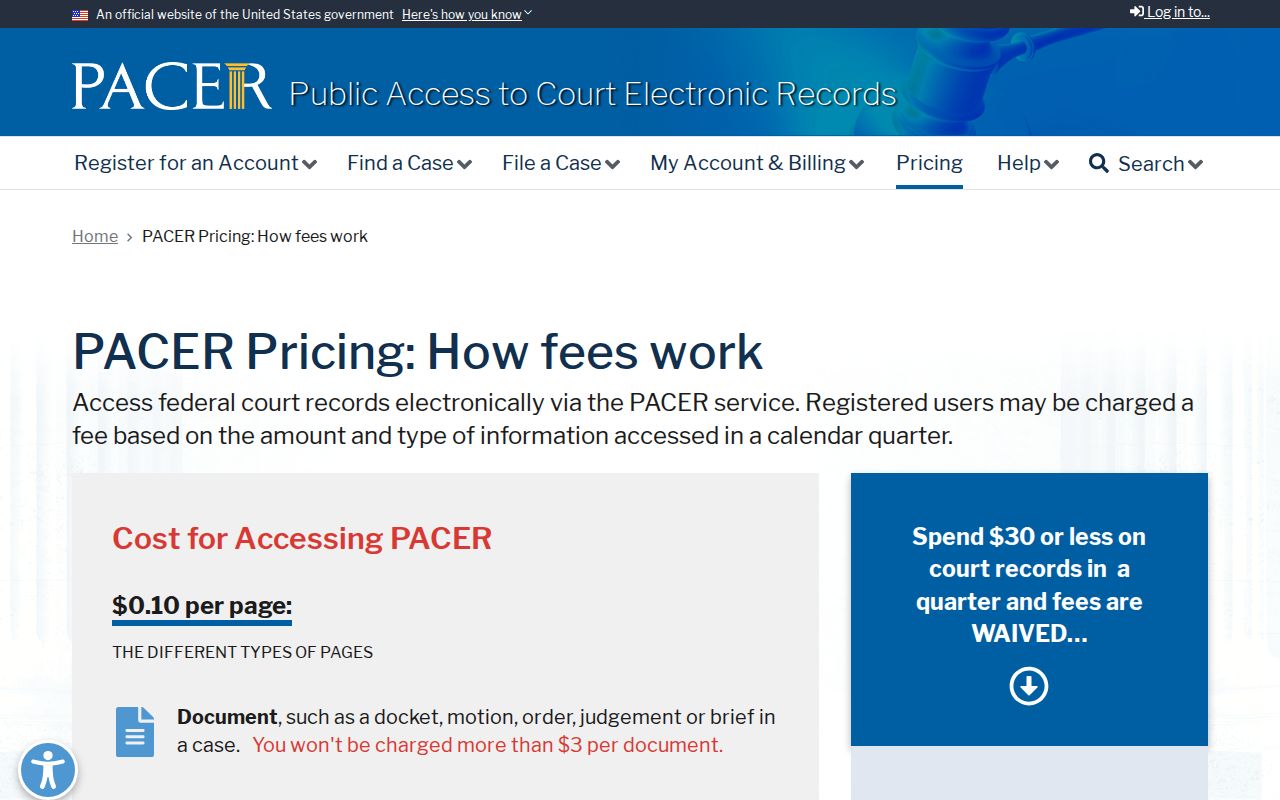
PACER bills per page. A quarterly waiver threshold can zero that cost. It is a docket tool for La Salle County federal cases, not a live warrant roster.
If There's an Arrest Warrant for You
Call the issuing court first. A La Salle County attorney can often arrange a walk-through instead of a public arrest. Ask if a warrant is active, whether counsel may handle the surrender, and what comes next: a hearing, a bond, or another filing. For a JP or municipal failure to appear, Chapter 45A's voluntary-appearance recall rule may apply in certain cases.
Confirm the route first. La Salle does not publish a surrender counter, warrant-specific walk-in hours, bond schedule, or standard motion form.
Ask the clerk where to report and what ID or paperwork to bring. If the court sends you to the sheriff for custody or bond details, call the published admin or dispatch number. Confirm the location and hours first. Keep your receipt, recall order, and next court date. More local resolution steps sit in the La Salle County warrant overview.